

Lab Week 2026

Medical Laboratory Professionals Week, also known as Lab Week, is held annually in recognition of medical laboratory professionals and pathologists. These professionals are a vital part of our community healthcare system.
At Carter BloodCare, our Reference & Transfusion lab is responsible for matching the blood on the shelves to the patients who need antigen-matched blood.
Our red blood cells have antigens living on their surfaces. When a patient needs a blood transfusion and receives blood from someone with different blood antigens, the body may mount an immune response by producing antibodies against those foreign antigens. To celebrate Lab Week, we interviewed three of our lab professionals to highlight the importance of the lab. Pamela Boyd is the Manager of Reference & Transfusion; Rose Bonuke is a Supervisor of Reference & Transfusion, and Jacky Polasky is a Lab Assistant.
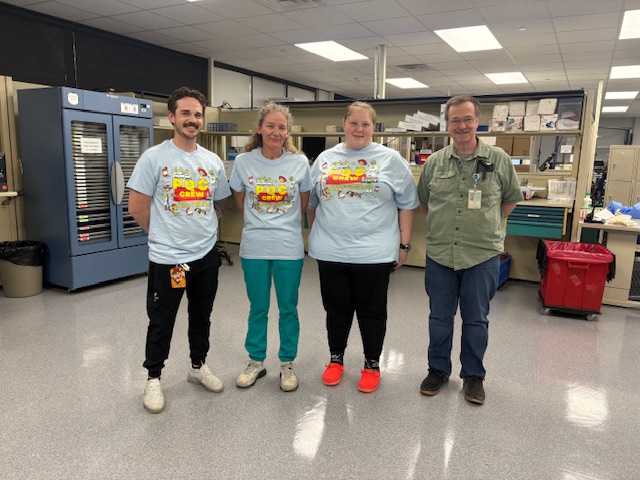
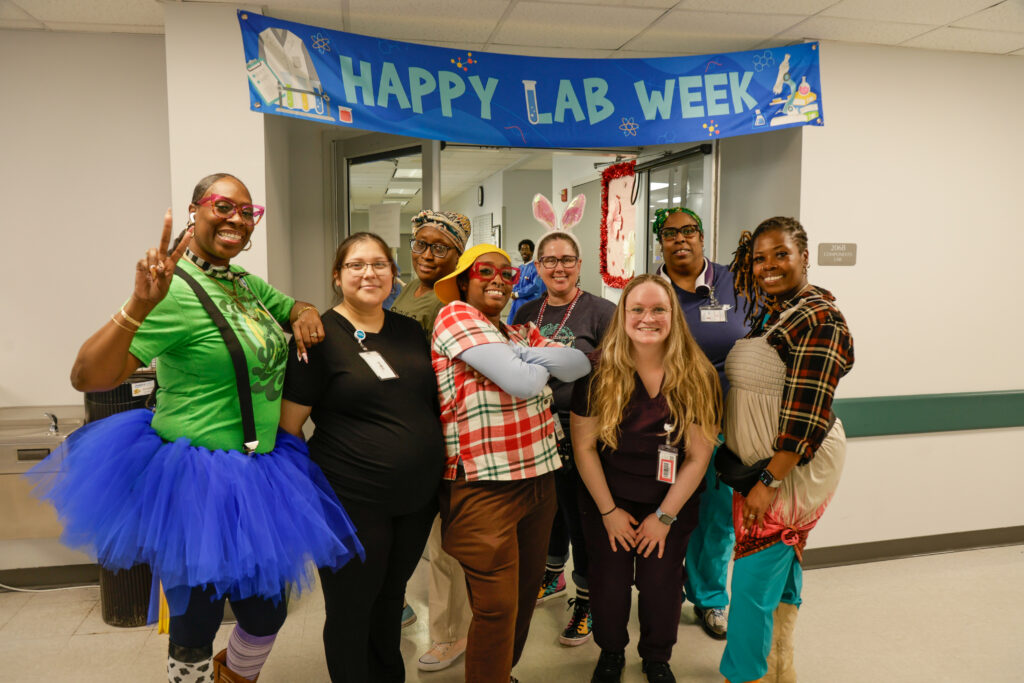
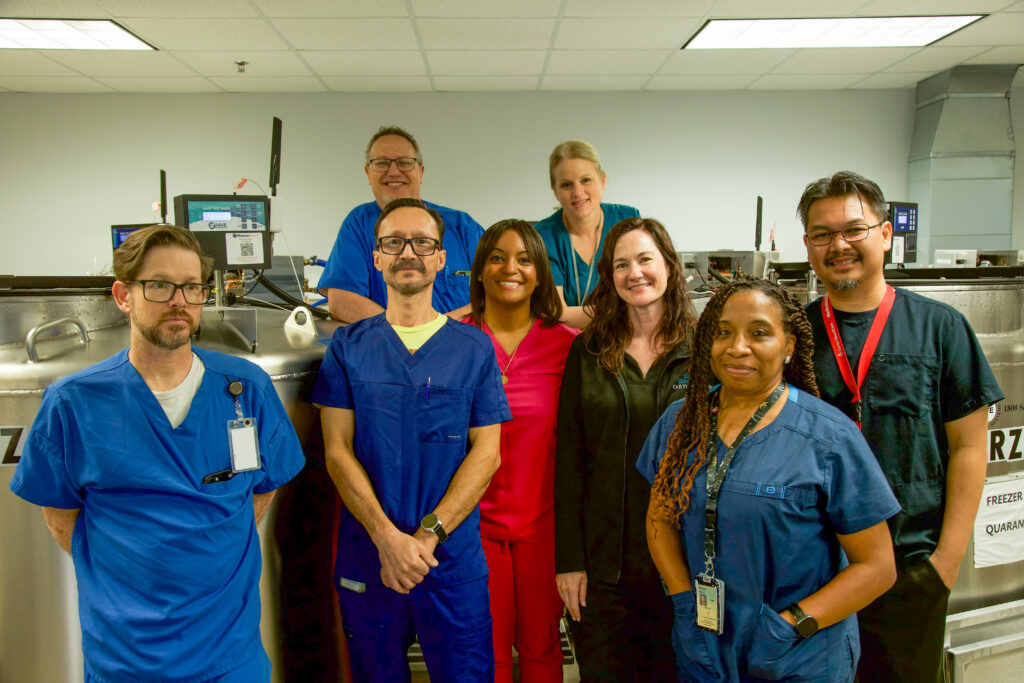
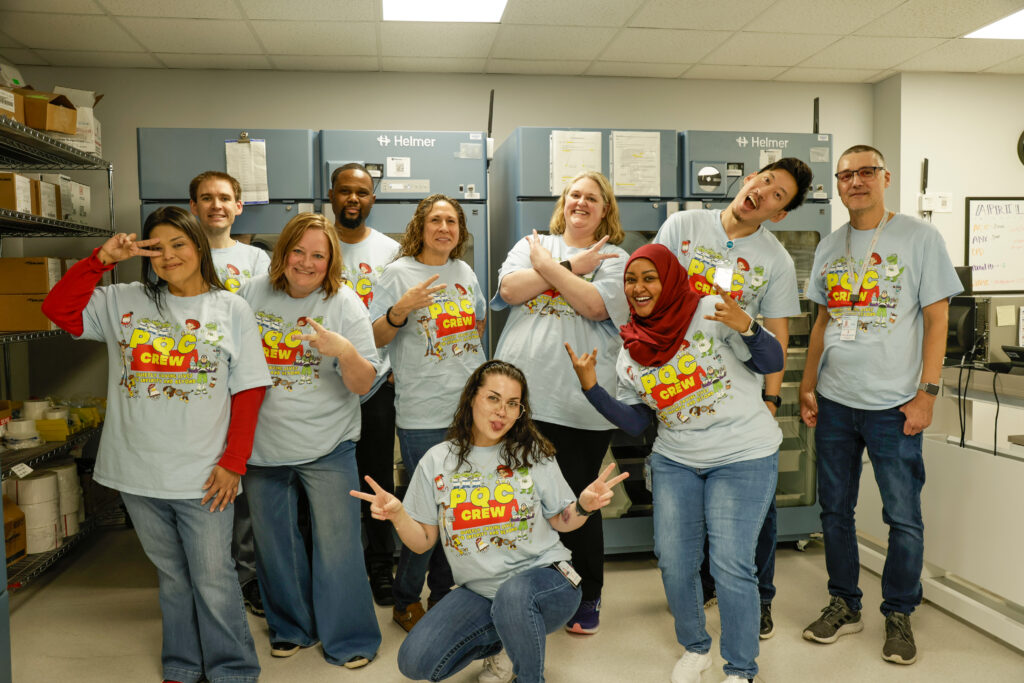
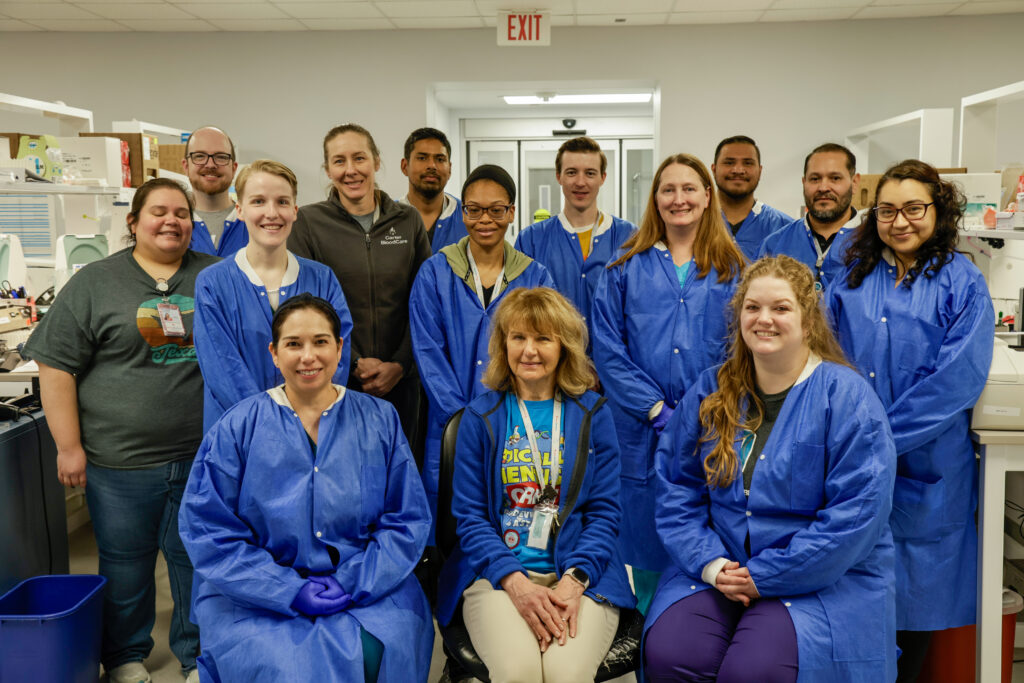
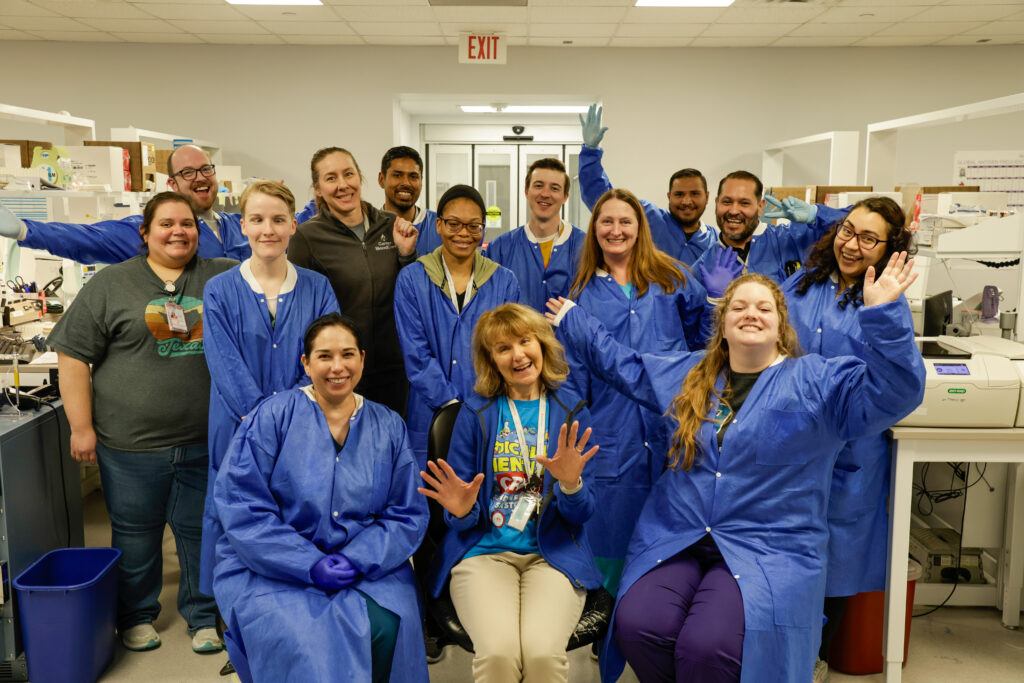
Responses are marked as PB (Pamela Boyd), RB (Rose Bonuke) and JP (Jacky Polasky).
Why is the lab important?
Pamela Boyd: The lab in general is important to health care, because they’re doing all the testing that’s going to help the physician, to lead them to a diagnosis or how to treat a patient. Our lab is extra special because we do very specific work, including identifying very rare antibodies and finding donors who are a match for that patient.
Rose Bonuke: The lab is very important. Our work is very critical because we work with blood products and perform testing that can mean life or death.
Jacky Polasky: Why is it important? It’s life. I mean, we all need blood to survive. It’s everything that we need. It’s everything that we do. It’s 24 hours, 7 days a week. It’s extremely important.
What role does it play in blood banking and transfusion?
PB: Yeah, the buck stops here, I always say. If a facility cannot determine why its patient doesn’t have compatible blood, it will come here to the immunohematology reference lab. And then we’re going to identify why they can’t figure it out. We’re going to figure it out for them, and then we’re going to find that donor that’s a match, hopefully.
RB: The lab plays a critical role in determining which compatible blood products will go to our patients and ultimately save lives.
JP: We definitely make transfusions possible, and it does take some time to get those matched units of blood for patients. Every single one of us has a part in getting the units, the products that we need to help save lives. But it does take some time. And everyone in the lab is very dedicated and spends a lot of time and effort paying attention to what they’re doing. And our response time is great.
What is your specific job?
PB: I’m a manager, and I oversee operations. I do all the quality control reviews. I’m scheduling employees and making sure supplies are ordered so we can do our job.
RB: I’m a supervisor in reference and transfusion, and basically my job is to oversee the lab, make sure that the lab is running normally, as expected, that we’re doing what we’re supposed to do, and that we’re saving lives.
JP: I’m a lab assistant in reference and transfusion. In the morning, I take phone calls from healthcare facilities, check our specimens and make sure they’re correct, matching the exact information on our request forms. There are a lot of little details that kind of go into working in the lab. It’s very critical to get everything right.
What advice would you give to someone who’s interested in a career in the lab?
PB: I would encourage anyone to certainly pursue a career in the lab. We’ve had a lot of young people come through our lab, and I’ve given tours and shown them what I do and what we do here. And I try to encourage them to pursue that career because there’s always going to be an opportunity.
RB: I would definitely encourage anyone to pursue a career in the lab because it’s a very satisfying career, and you’ll save lives.
JP: Definitely ask questions and don’t be afraid to ask. I know when I first started here, I was always afraid to ask questions. A lot of my coworkers will help me to be at ease and for me to ask questions, but I would definitely say, don’t be afraid, dive in, if you’re somebody that’s interested in doing it, definitely talk to someone.
What’s your message to lab professionals for lab week?
PB: Great job. We’re happy to have you. We couldn’t do the job without you. Keep it up. Hope you get something good for lunch.
RB: My message to the lab professionals would be You know, this is a very important test that you’re doing. Sometimes it’s really overlooked, but just to make them feel really important because they are.
JP: Back to what I said earlier. Don’t be afraid to ask questions. Communication is the key. If we don’t know something, we need to ask. And I know that when I first started out, I was always a little hesitant about asking questions. But after a while, it just comes easily. Definitely ask questions and have great communication skills.