


Blood donors are participants in living history
Every blood donation tells a story. A donation is transfused to a patient who needs blood, a lifesaving measure. This creates a ripple effect. One life is saved, and others are impacted because that patient was given the gift of life through blood donation.
The Father of Blood Banking
That isn’t the only ripple effect. Every donation is living history because every modern blood transfusion is made possible by Dr. Charles Drew, known as the father of blood banking. He is responsible for the original method of long-term plasma storage, organizing America’s first blood bank, and the invention of mobile blood collections.
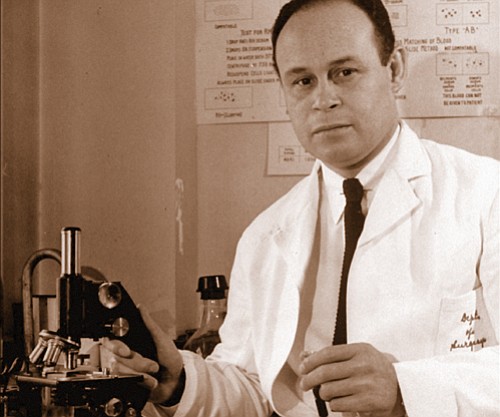
In addition, Dr. Drew trained a generation of Black/African American doctors at Howard University College of Medicine, and he was appointed as an examiner for the American Board of Surgery, the first African American to hold that role.
Though he is known as the father of blood banking, Dr. Drew’s schooling and career existed entirely during the pre-civil rights era, when Black/African American donors were initially excluded, and later, their blood donations were segregated, and he had less access to elite schooling and job opportunities. He was a vocal advocate against the exclusion of Black physicians from the American Medical Association, and he campaigned for the inclusion of Black blood donors.
Dr. Drew was an influential architect of the original blood banking system. Along with many other pioneering scientists, he helped lay the foundation for the blood banking system on which our healthcare system depends on.
Advancements
Blood donation is a shared history, an act that saves a life and unites donors as a community. Dr. Drew was the first to introduce the method of preserving blood plasma. Today, blood can be stored for 42 days, and plasma for 26 days. Plasma can also be frozen to extend the amount of time it can be stored.
During the early days of blood banking, there were limited ways to test blood before transfusion. Today, all donations go through extensive testing prior to transfusion. The transportation of blood from blood banks to hospitals has also greatly improved in the 80 years since the inception of the first blood banks.
Today’s blood donation process is more advanced, but the mission to save lives through transfusion remains the same. Each time someone donates blood, they carry forward Dr. Charles Drew’s legacy, rooted in science, equity and service. Every donation strengthens our shared history, and creates new ripples of hope for patients and families who depend on the gift of blood.
It is essential that the available blood supply reflects the communities we serve. This means our blood donors should represent a vibrant spectrum of ages, backgrounds, cultures and blood types. Increasing representation of Black/African American donors supports health equity and access to lifesaving blood in the communities we serve.
For more information about blood donation and impact it makes in our community, visit our website.